
A phishing scam is a type of cybercrime in which criminals send emails or messages that appear to come from a legitimate source such as a bank, government agency, or payment processing service. They then use the email or message to persuade the recipient to disclose confidential information. This information can include account numbers, passwords, or credit card information.
This article will answer the following questions:
The term “phishing” is a play on words and a variation of the word “fishing”. Fake emails, messages, and websites in a phishing scheme are used as lures to “fish” for personal or sensitive information.
The five most common types of phishing scams include the following:
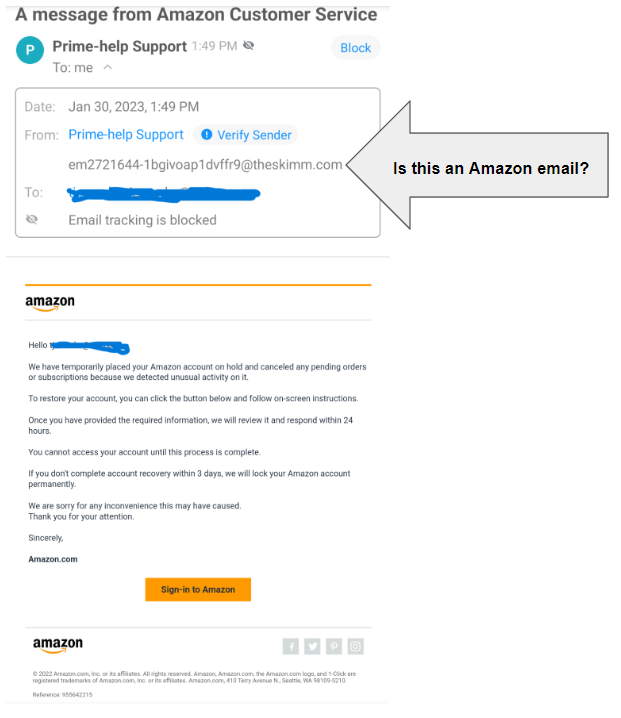
The intention of malicious software, also known as malware, is to damage, disrupt, or gain unauthorized access to a computer system or network. Malware is typically designed to perform one or more of the following activities: steal data, monitor user activity, deliver spam and malicious links, launch denial-of service attacks, or even take control of a system. A Denial of Service (DoS) attack prevents legitimate users from accessing a target service or system. This is typically accomplished by flooding the targeted service or system with a large amount of traffic or requests. This causes the service or system to become overloaded and unresponsive. DoS attacks can be used to cause a service or system to become temporarily unavailable or to cause a permanent denial of service.
Once on a system, malware can collect and transmit sensitive data to the attacker. This can include passwords, financial information, and other confidential information. Additionally, malware can be used to create a backdoor, which allows the attacker unauthorized access to the system and data.
Another type of malicious software that is the goal of attackers is ransomware. Ransomware is designed to block access to a computer system or its data until a ransom is paid. In some cases, ransomware will display a message to inform the user of the encryption placed on their system and then to demand payment for the decryption key. In addition to malicious attachments or links to malicious websites in phishing emails, ransomware can also be spread through vulnerable networks such as those with weak passwords or outdated software. Ransomware can be extremely damaging to individuals and organizations, as it can prevent victims from accessing their data and systems until the random is paid. In some cases, ransomware can even spread to other devices if they are connected to the same network.
Phishing scams can pose as many types of legitimate businesses, but some businesses and organizations are used more than others:
The intention of malicious software, also known as malware, is to damage, disrupt, or gain unauthorized access to a computer system or network. Malware is typically designed to perform one or more of the following activities: steal data, monitor user activity, deliver spam and malicious links, launch denial-of service attacks, or even take control of a system. A Denial of Service (DoS) attack prevents legitimate users from accessing a target service or system. This is typically accomplished by flooding the targeted service or system with a large amount of traffic or requests. This causes the service or system to become overloaded and unresponsive. DoS attacks can be used to cause a service or system to become temporarily unavailable or to cause a permanent denial of service.
Once on a system, malware can collect and transmit sensitive data to the attacker. This can include passwords, financial information, and other confidential information. Additionally, malware can be used to create a backdoor, which allows the attacker unauthorized access to the system and data.
There are several steps you can take to protect yourself from a phishing scam:
Matraex is a software and app development company based in Boise, Idaho. We would like to help you with all of your app development and technology concerns. Feel free to contact us, leave a question on our instant messaging feature on our website, or send us a question through our Google Business profile. We look forward to answering your questions.
Sign up to receive answers to your questions delivered directly to your inbox!
Matraex builds custom web and mobile applications. Our team of professionals can drive development of your app from vision to reality.
Boise, Idaho
Based in the cloud